'Nutrition For Cyclists'
This comprehensive ebook is just $2.99!
Cruise the Burke-Gilman Trail Through the Land of Coffee and Cafes
Seattle
Burke-Gilman Trail
Distance: 27 miles
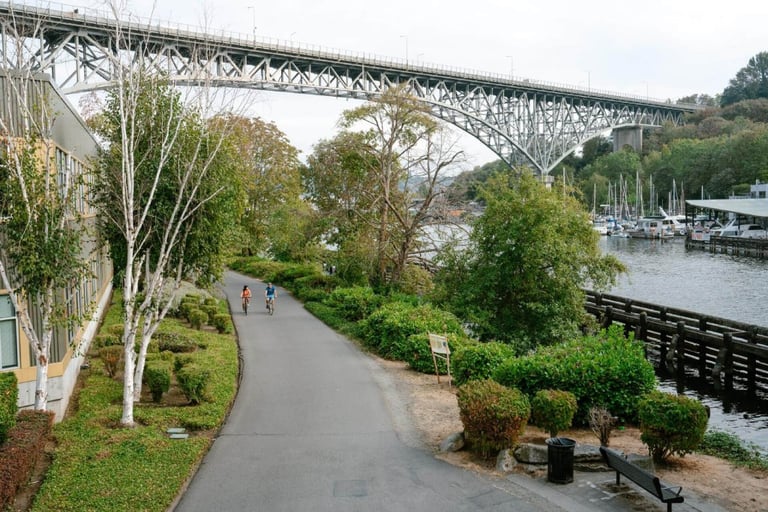
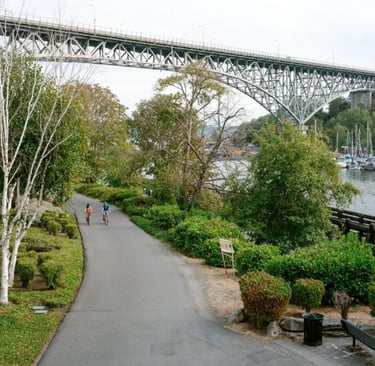
The Burke-Gilman Trail runs about 27 miles from Ballard through Seattle and north along Lake Washington toward Bothell. Built largely on a former rail corridor, it is an established route and largely separated from traffic. While some short gaps that require taking streets remain in Ballard, most of the trail is clearly marked and heavily used year-round.
Many riders begin near Golden Gardens Park in Ballard. From there, the path tracks inland and connects quickly to the Ship Canal corridor. This section includes a mix of paved trail and brief street segments. The riding soon turns to longer segments protected from vehicle traffic.
Grab a coffee in Fremont
The trail passes near Fremont Bridge and runs through the Fremont neighborhood, where cafés, breweries, and casual restaurants sit just off the path. Coffee stops are easy to reach. Continuing east, the route follows the Lake Washington Ship Canal toward Gas Works Park, a gathering spot for cyclists and pedestrians where you’ll find a great view of Seattle. This portion of the route can be busy, particularly on weekends and during commuting times.
East of the University District, the trail crosses near the University of Washington campus and continues north along Lake Washington, bordered by water on one side and residential neighborhoods on the other. Through here, there are recreational riders and daily commuters heading between Seattle and north-end communities.
As the trail continues toward Kenmore and Bothell, crowds aren’t as thick as they are in Seattle. Intersections become less frequent, and the corridor runs alongside wetlands and light industrial areas. The connection into Bothell links directly with the Sammamish River Trail, if you want a longer ride on a different path.
Food and drink options are mostly in the Seattle and Fremont areas. In Fremont, riders can leave the trail to reach coffee shops along North 36th Street or sit-down restaurants near the canal. In the University District, additional cafés and quick-service spots are within a few blocks. North of Kenmore, options thin out.
Mind the leaves
The Burke-Gilman carries significant pedestrian traffic, including runners, families, and dog walkers. During peak hours, maintaining higher speeds isn’t always easy. Signage is generally clear, but street connections in Ballard require attention. Wet conditions are common for much of the year, and fallen leaves can collect in autumn.
Still, the Burke-Gilman Trail provides a reliable way to move across Seattle without relying on roads. It links neighborhoods, parks, campuses, and business districts. Whether you are commuting, riding to a café in Fremont, or connecting to longer routes north of the city, you’ll be on one of the Pacific Northwest’s most active and interesting cycling corridors.
Roll through Gas Works Park on the Burke-Gilman Trail
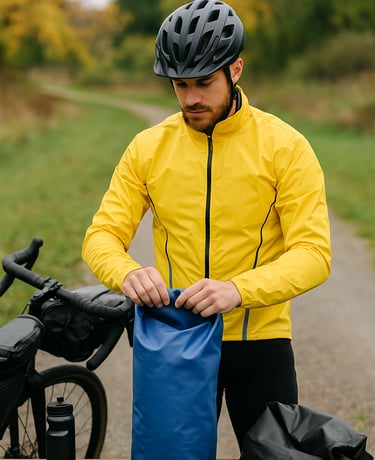
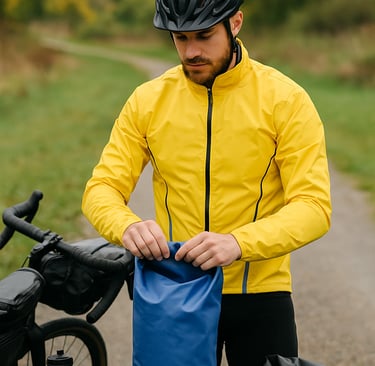
Cycling in Seattle? Dry bags of all sizes on Amazon.
Burke-Gilman Trail
Distance: 27 miles
The Burke-Gilman Trail runs about 27 miles from Ballard through Seattle and north along Lake Washington toward Bothell. Built largely on a former rail corridor, it is an established route and largely separated from traffic. While some short gaps that require taking streets remain in Ballard, most of the trail is clearly marked and heavily used year-round.
Many riders begin near Golden Gardens Park in Ballard. From there, the path tracks inland and connects quickly to the Ship Canal corridor. This section includes a mix of paved trail and brief street segments. The riding soon turns to longer segments protected from vehicle traffic.
Grab a coffee in Fremont
The trail passes near Fremont Bridge and runs through the Fremont neighborhood, where cafés, breweries, and casual restaurants sit just off the path. Coffee stops are easy to reach. Continuing east, the route follows the Lake Washington Ship Canal toward Gas Works Park, a gathering spot for cyclists and pedestrians where you’ll find a great view of Seattle. This portion of the route can be busy, particularly on weekends and during commuting times.
East of the University District, the trail crosses near the University of Washington campus and continues north along Lake Washington, bordered by water on one side and residential neighborhoods on the other. Through here, there are recreational riders and daily commuters heading between Seattle and north-end communities.
As the trail continues toward Kenmore and Bothell, crowds aren’t as thick as they are in Seattle. Intersections become less frequent, and the corridor runs alongside wetlands and light industrial areas. The connection into Bothell links directly with the Sammamish River Trail, if you want a longer ride on a different path.
Food and drink options are mostly in the Seattle and Fremont areas. In Fremont, riders can leave the trail to reach coffee shops along North 36th Street or sit-down restaurants near the canal. In the University District, additional cafés and quick-service spots are within a few blocks. North of Kenmore, options thin out.
Mind the leaves
The Burke-Gilman carries significant pedestrian traffic, including runners, families, and dog walkers. During peak hours, maintaining higher speeds isn’t always easy. Signage is generally clear, but street connections in Ballard require attention. Wet conditions are common for much of the year, and fallen leaves can collect in autumn.
Still, the Burke-Gilman Trail provides a reliable way to move across Seattle without relying on roads. It links neighborhoods, parks, campuses, and business districts. Whether you are commuting, riding to a café in Fremont, or connecting to longer routes north of the city, you’ll be on one of the Pacific Northwest’s most active and interesting cycling corridors.
Roll through Gas Works Park on the Burke-Gilman Trail
Cycling in Seattle? Dry bags of all sizes on Amazon.
Some pages contain affiliate links. If you purchase something through one of these links, we may earn a small commission.